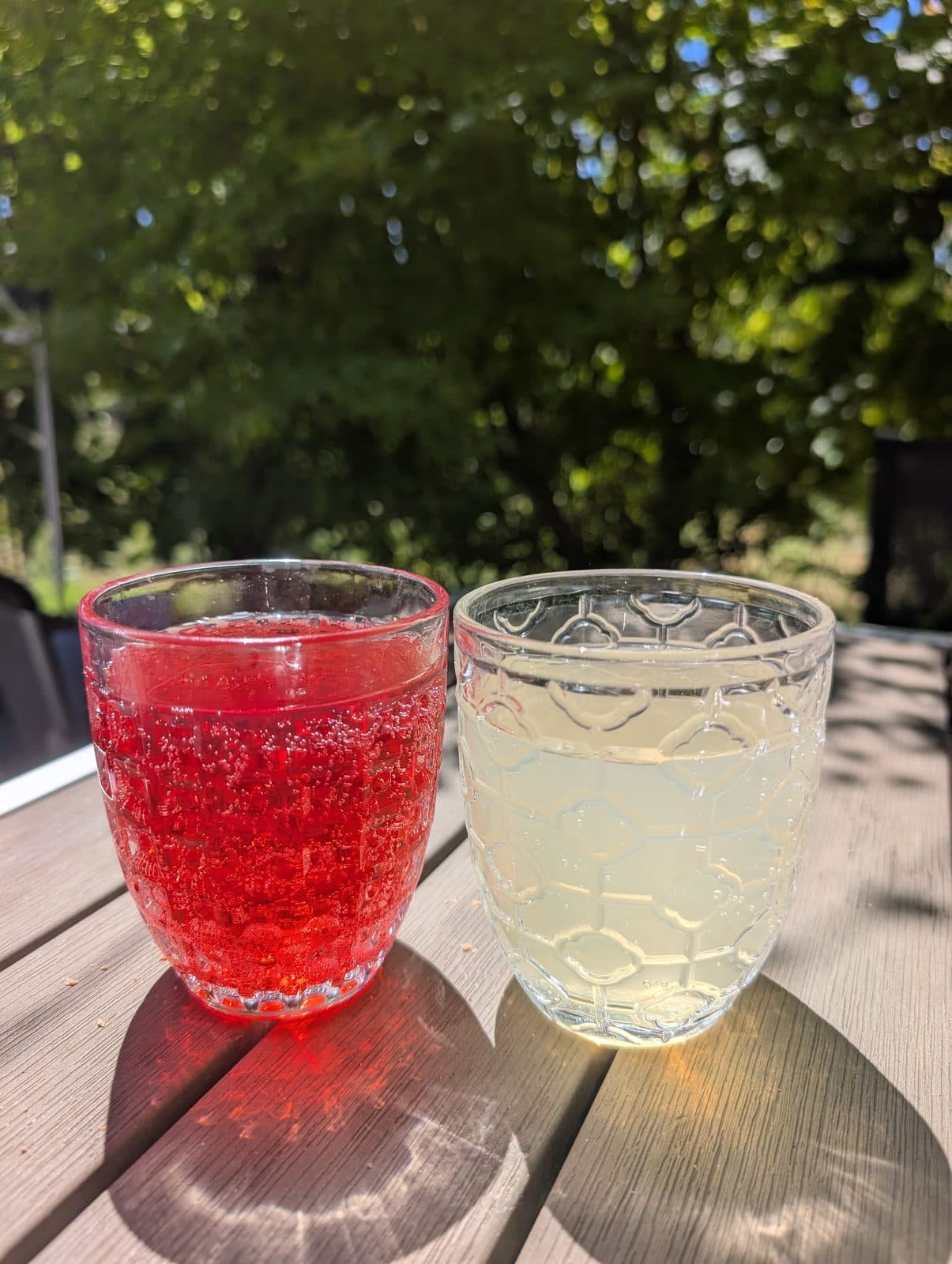
Fizzy fermented drinks without the alcohol: which one should you brew?
You want living bubbles, a flavour that beats industrial lemonade, and little to no alcohol? Good news: there's a whole family of homemade fermented drinks that tick those boxes — and most need less equipment than a coffee machine.
One honest note first: "non-alcoholic" here means "very low alcohol". Every fermentation produces a little; these drinks usually land around 0.5 to 1.5% ABV — somewhere between a very ripe fruit juice and a generous "0.0" beer. That's exactly why they're the stars of the low-ABV trend: the pleasure of a fizzy drink in hand, without the evening going sideways.
Here are the six big families, from most accessible to most curious.
1. Water kefir — the gateway
The taste: light, fruity lemonade with a fine fizz. The least "fermented-tasting" drink on this list — perfect for converting sceptics.
How it works: kefir grains (translucent living cultures, found through donations or online) ferment sugared water for 24 to 48 h (the F1, first ferment in an open jar), then you bottle with fruit or juice for the F2 — the second ferment in a sealed bottle, which is where the bubbles come from.
Difficulty: easy. Short cycle (3-4 days from jar to glass), the grains multiply on their own, and failures are rare and fixable.
👉 To get started: the complete water kefir guide (grains, F1, F2).
2. Kombucha — the famous one
The taste: fizzy, tangy tea, somewhere between cider and mild apple vinegar. Endlessly flavourable in F2 (ginger, berries, hibiscus…).
How it works: a SCOBY (the "mother", a disc of symbiotic cultures) ferments sweetened tea for 7 to 14 days, then F2 in bottles for the fizz.
Difficulty: medium. Nothing technically hard, but the cycle is long and the sweet spot between "too sweet" and "too vinegary" comes down to a few days — this is the drink where tracking your timing matters most.
3. Ginger beer — the punchy one
The taste: bold ginger, sweet and spicy, very fizzy. The closest thing to a craft soda.
How it works: you first raise a "ginger bug" (a ginger starter: grated ginger + sugar + water, fed daily for about a week), which then kick-starts a sweetened ginger infusion before the F2 in bottles.
Difficulty: medium. The bug needs a small daily ritual at the start, and the F2 is vigorous — this is THE drink of overflowing (or exploding) bottles when forgotten in the warmth.
4. Hop water — the newcomer
The taste: hoppy sparkling water, fine bitterness, IPA-style aromas… without the beer. Zero residual sugar, near-zero calories.
How it works: a hop infusion, a touch of sugar and some yeast, fermented a few days then bottled. It's the fermented answer to the flavoured sparkling water wave.
Difficulty: easy to medium. Few steps, but hops need careful dosing (bitterness climbs fast).
👉 The step-by-step recipe: homemade hop water. (published this week)
5. Kvass — the rustic one
The taste: toasted grains, lightly tangy, between liquid toast and a very light beer. An Eastern European classic.
How it works: well-toasted rye bread, steeped in water with sugar and yeast (or a sourdough starter), fermented 1 to 3 days then bottled.
Difficulty: easy. Pantry ingredients, short cycle, very forgiving. Its only challenge: the taste is love-it-or-leave-it.
👉 The recipe: homemade kvass. (published this week)
6. Jun — the refined cousin
The taste: like kombucha, but softer, floral, almost champagne-like. Jun ferments green tea with honey instead of black tea with sugar.
How it works: same principle as kombucha, with a specific SCOBY adapted to honey, a shorter cycle (4-7 days) and a preference for cooler temperatures.
Difficulty: medium to demanding — mostly because a jun SCOBY is harder to find. Save it for when kombucha holds no more secrets.
The comparison table
| Drink | Time (full cycle) | Difficulty | Starting equipment |
|---|---|---|---|
| Water kefir | 3-4 days | ★ Easy | Jar, grains, swing-top bottles |
| Kombucha | 9-16 days | ★★ Medium | Wide jar, SCOBY, bottles |
| Ginger beer | ~10 days (bug included) | ★★ Medium | Small jar, fresh ginger, bottles |
| Hop water | 4-6 days | ★-★★ Easy+ | Pot, hops, yeast, bottles |
| Kvass | 2-4 days | ★ Easy | Rye bread, large jar, bottles |
| Jun | 5-8 days | ★★★ Demanding | Jun SCOBY, green tea, honey, bottles |
The one real shared investment: swing-top bottles (thick glass, lemonade style) for the F2. Everything else, you probably already own.
Which one should you start with?
- You want a fast, safe win: water kefir or kvass.
- You like tangy and have patience: kombucha.
- You want punch and a project: ginger beer.
- You're replacing beer at aperitivo time: hop water.
- You want to impress: jun.
And nothing says you have to choose: most fermenters end up with two or three jars going at once. That's where it gets tricky — a kefir finishing its F1, a kombucha due for tasting, a ginger beer F2 building pressure in the cupboard. At three batches, memory stops keeping up; that's exactly what FermPal tracks for you, phase by phase, drink by drink.
Track my ferments with FermPal (free) →
To keep it all organised: the online fermentation tracker. And if your kefir stays flat, here's why your water kefir isn't fizzy.